
Not every political speech at a multinational summit matters beyond the room where it is delivered. Emmanuel Macron’s address at the AI Impact Summit in Delhi was an exception. By centring child safety and defending European regulation against American criticism in the same speech, the French president accomplished something rare: he connected a moral imperative to a policy argument and made both stronger in the process.
The moral imperative was clear. Research by Unicef and Interpol had documented 1.2 million child victims of AI-generated deepfakes in a single year across 11 countries. One in 25 children in some nations had been affected. Macron named the problem explicitly, referenced specific cases including the Grok chatbot scandal, and made the straightforward argument that what is illegal in the physical world must be illegal online. This is not a complicated idea. What has been missing is political will to enforce it.
The policy argument was equally direct. Macron rejected the claim that European AI regulation stifles innovation, describing its critics as misinformed. He argued that Europe innovates, invests and protects its people simultaneously, and that this combination is a strength rather than a weakness. His target was the Trump administration’s AI adviser, who had used the same summit to attack the EU’s AI Act — but his audience was broader: every government watching to see whether the European model is defensible or doomed.
Support came from influential quarters. António Guterres framed child safety within the larger governance crisis, warning that unregulated AI in the hands of a few powerful actors threatens everyone. India’s Modi called for child-safe, family-guided AI development and open-source models that could distribute AI’s benefits more broadly. Sam Altman, speaking with surprising candour about AI’s risks, called for an international oversight body. The emerging consensus — that some form of robust governance is necessary — is not the consensus of two years ago.
Macron’s Delhi speech will not by itself change the rules governing AI. But it moved the terms of debate in a direction that makes change more likely. Child safety is now explicitly on the G7 agenda. European regulation has been defended with evidence rather than rhetoric. The coalition for meaningful AI governance — including governments, international institutions and, tentatively, parts of the tech industry — is broader than it was before the Delhi summit. That is not nothing. That is, in fact, quite a lot.
Macron’s AI Stand in Delhi: The Speech That Reframed a Global Debate
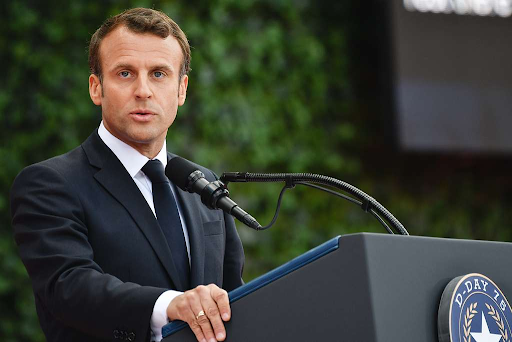
Picture Credit: nara.getarchive.net
53