
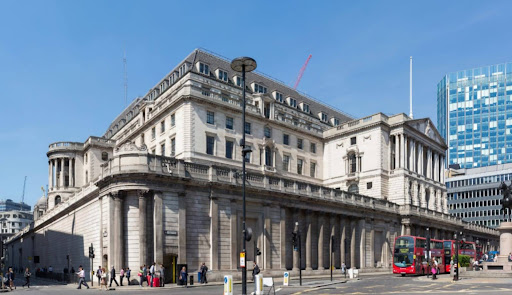
The Bank of England’s decision to hold rates at 3.75% on Thursday has left both UK savers and borrowers uncertain about what lies ahead, with policymakers sending mixed signals about the future direction of monetary policy in the face of the Iran war’s economic fallout. The monetary policy committee’s unanimous hold was accompanied by warnings of potential rate hikes driven by energy price inflation, but the governor also cautioned against assuming that hikes were imminent or certain. The result is a policy environment characterised by genuine uncertainty.
For savers, the hold maintains current returns on deposits and savings products, but the prospect of higher rates provides some prospect of improved future yields. For borrowers, especially those with variable rate mortgages or approaching the end of fixed-rate deals, the uncertainty about whether rates will rise or eventually fall is a source of considerable financial anxiety. Fixed rate mortgage products have already begun to reflect the changed expectations, climbing to their highest levels since early 2025.
The uncertainty stems from the war between the United States, Israel, and Iran, which has disrupted global energy markets and threatened to push UK inflation back above 3%. The Bank had been on a course toward rate reductions, but the conflict has introduced a new variable that has fundamentally complicated the policy outlook. The Bank now projects inflation rising toward 3.5% in March and remaining above target throughout 2026.
Governor Andrew Bailey’s messaging was characteristically careful. He acknowledged the inflation risk from the war while emphasising that no predetermined path had been set. He said the Bank would act as necessary but was choosing to wait for more information before committing. His call for restraint in interpreting the decision was an acknowledgement that markets had been getting ahead of themselves.
The practical uncertainty this creates for UK households is real. Whether to fix a mortgage rate now or wait for potential cuts, whether to lock in savings rates or hold out for higher returns — these decisions are complicated by the Bank’s genuinely undecided stance. The coming weeks of inflation data and geopolitical developments will be critical in clarifying the picture.