
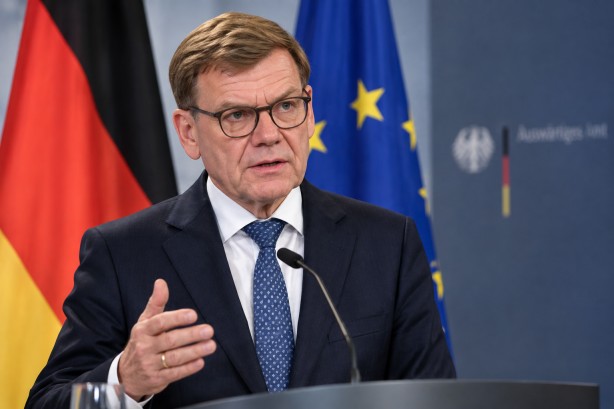
As Germany and Hungary seek to redefine their bilateral relationship, high-level discussions between the two nations have underscored a commitment to strengthening ties across multiple sectors. German Foreign Minister Johann Wadephul’s recent visit to Budapest marked a significant step in these efforts, focusing on diplomatic cooperation, economic collaboration, and energy diversification.
During the talks, Wadephul praised Hungary’s initiatives on rule-of-law reforms and expressed support for its ongoing efforts to access European Union funds. This dialogue comes at a time when both countries are looking to enhance their roles within the EU, addressing broader regional concerns such as energy policy and European security.
Wadephul emphasized the importance of reducing dependency on Russian energy sources, a critical issue for the EU. Energy policy discussions between Berlin and Budapest centered on diversification strategies, reflecting a shared interest in securing sustainable energy futures. The conversations also touched on Germany’s approach to Russia, aligning with broader European security objectives.
Economic cooperation was another focal point of the visit, with Wadephul and Hungary’s Minister of Economy and Energy meeting with representatives from major German firms like Mercedes-Benz, Siemens, and BMW. These discussions aimed to bolster economic recovery and competitiveness, with particular attention to infrastructure, the automotive sector, and Hungary’s energy strategy. Both nations are keen to expand the presence and influence of German businesses within Hungary’s economy.
This diplomatic engagement illustrates the ongoing efforts by Berlin and Budapest to reset and enhance their bilateral relations. As both countries navigate the complexities of European policy, their collaboration is set to play a crucial role in shaping their shared economic and strategic landscapes.