
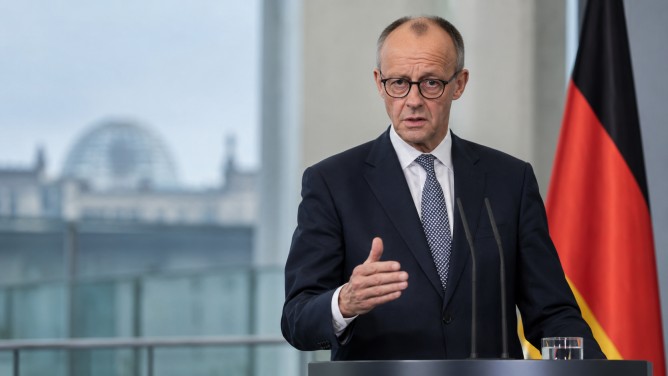
Germany’s political landscape is experiencing notable shifts as regional elections reveal deepening divisions within the country. The recent elections in Berlin and Mecklenburg-Western Pomerania have underscored the growing influence of the far-right Alternative for Germany (AfD) party, while dealing a setback to Chancellor Friedrich Merz’s Christian Democratic Union (CDU).
In Berlin, the left-wing Die Linke party emerged victorious, securing approximately 25.7% of the vote. This placed them ahead of the CDU, which garnered about 18.8%. The AfD, showcasing its increasing popularity, finished third with around 16.3% of the vote, highlighting the party’s expanding reach beyond its traditional strongholds.
Meanwhile, in Mecklenburg-Western Pomerania, the AfD achieved a significant victory, capturing around 38.2% of votes, narrowly surpassing the Social Democrats who obtained 35.5%. The CDU faced a disappointing outcome, receiving just 4.9% and failing to meet the 5% threshold required for representation in the state parliament.
These results place additional pressure on Chancellor Merz, especially following the AfD’s strong performance in Saxony-Anhalt earlier this month. Despite the setbacks, Merz has expressed his intention to remain in office and continue with his government’s planned economic and social reforms, signaling a commitment to his current leadership approach.
The election outcomes have sparked discussions within the CDU about its leadership and strategy, as the AfD’s rise reveals shifting political dynamics, particularly in Germany’s eastern regions. The results also emphasize Die Linke’s growing influence in urban areas like Berlin, potentially reshaping the country’s political landscape and fueling ongoing debates about the future direction of German politics.