
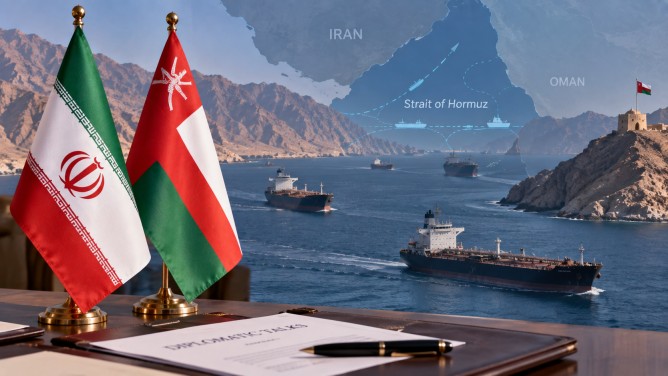
A crucial meeting aimed at discussing new shipping protocols through the Strait of Hormuz between Iran, Oman, and other Gulf nations has been delayed, with no future date set. Originally scheduled in Muscat, the assembly was expected to focus on regional security and a proposal from Iran and Oman to manage commercial shipping in this vital maritime corridor. Oman’s Foreign Minister, Badr Albusaidi, cited the need for consensus as the reason for the postponement. Iran confirmed that the decision was made in collaboration with Oman, following requests from several regional countries.
The delay follows an incident involving an Iranian commercial vessel near Qeshm Island, where a reported strike resulted in one fatality and injuries to four crew members. Iranian state media reported that the vessel encountered a projectile while navigating the Strait of Hormuz, leading to a fire and subsequent evacuation of the crew. This recent development has put a spotlight on the security concerns surrounding this critical waterway.
Recently, Iran and Oman discussed alternative shipping routes through the Strait of Hormuz. Under the proposed system, vessels entering the Persian Gulf would navigate through Iranian waters, while those exiting would use both Iranian and Omani waters. Iran has emphasized that any reopening of the Strait would be contingent upon meeting its conditions, and officials have suggested that Tehran may impose fees on vessels utilizing these routes.
The commercial flow through the Strait remains notably reduced, a pressing issue for global energy markets as the waterway is a key passage for oil shipments. The postponement of the meeting occurs amid escalating diplomatic tensions in the Gulf. Reports indicate that Saudi Arabia has sought modifications to the proposed Iran-Oman plan, while Bahrain has opted out of participating in the discussions.
These uncertainties have contributed to a rise in oil prices, with the ongoing closure of Saudi Arabia’s 1,200-km East-West oil pipeline due to previous drone strikes further straining alternative routes for crude transport to the Red Sea. The prolonged shutdown of this pipeline, coupled with the diminished shipping activity through the Strait of Hormuz, poses a significant risk to global oil supplies, as reflected in the increased Brent crude prices, which have surpassed $100 a barrel amid the prevailing regional tensions.