
Amid escalating tensions over maritime claims in the Eastern Mediterranean, Greece and Egypt are set to enter negotiations to extend their exclusive economic zone (EEZ) agreement eastward. The talks, agreed upon in principle, aim to expand the existing maritime boundary established in August 2020, which currently spans between the 26th and 28th meridians. The proposed extension would cover waters east of the 28th meridian, an area that includes the island of Rhodes.
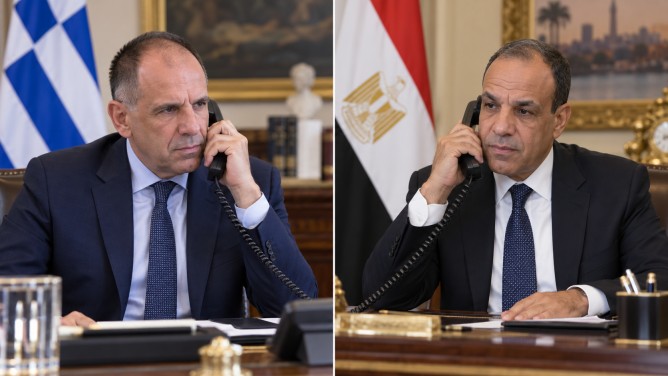
The decision to pursue these negotiations was discussed during a telephone conversation between Greek Foreign Minister George Gerapetritis and Egyptian Foreign Minister Badr Abdelatty. Both countries have expressed opposition to Libya’s recent ratification of a maritime memorandum with Turkey, which has contributed to ongoing disputes over maritime boundaries in the region. Greece and Egypt argue that islands should be factored into maritime boundary determinations, a principle they believe is overlooked in the Turkish-Libyan agreement.
Technical-level consultations between Greece and Egypt are anticipated to commence soon, as both nations work to advance discussions on the EEZ extension. The move underscores their commitment to reinforcing their maritime rights amidst regional geopolitical tensions.
In response to the Turkish-Libyan memorandum, Greece has announced its intention to bring the matter to the attention of the European Union and the United Nations, seeking a unified international reaction. Turkey, however, maintains that the agreement with Libya is valid and dismisses assessments by external parties.
The latest initiative by Greece and Egypt to extend their maritime boundary agreement highlights the ongoing challenges of defining jurisdiction and influence in the resource-rich Eastern Mediterranean, where competing claims continue to stir diplomatic friction.